0

Deborah S. Patz – Author

Author of film books for industry pros and youth

Keychain Clapboard

The shot had to start really close on the food buffet, and then pull out for the action of scene.

Sure we could start with the camera on wide angle, use the clapboard, and then reset the camera for that extreme close-up beginning… but all that takes precious film-rolling-thru-the-camera time.

Sure we could tail-slate – using the clapboard upsidedown at the end of the scene; however, if not well-practised, tail slates can be forgotten, providing an editing nightmare… or the camera can be in just as an inaccessible position at the end of the scene as it was at the beginning.

I like what our camera department did… using one of those touristy clapboard keychains, and very small writing – the keychain clapboard was just the right size to fill the frame of the extreme closeup. We saved precious film stock, we got a good “clap” (proportionally that is!), we got the shot.

Who’dve thought those touristy things you buy (like keychains) could actually be used on real film set!

Cheers,
Deb
3 Things I Learned About Filmmaking from… Racing Sailboats

Life can teach you about filmmaking even when you’re not making films… here are 3 things I learned from racing sailboats:

1. Hire the right team & rely on them
The right team on a racing sailboat is made up of people with differing skills and specialities. With the right folk on the bow, mast, jib trim, main & traveller, winches, helm, navigating, and so on, the boat races efficiently… creating magic as it harnesses the power of the wind. The crew rely on each other – maybe taking input from each other – but each specialist has a responsibility to their job in order to support the entire crew. Sounds familar to a set and film crew?

2. Food is essential
Long distance sailboat racing reveals how critical good food is to the crew and therefore to the boat. With 4-hour watches, a racing member’s waking hours revolves around sailing the boat, taking care of nature and eating. That’s a lot of focus on very few topics for a very long time. After 3 days sailing the Mackinaw race, you’ll hear the various crews in the bar minutes after the race one-upping each other about what they ate during the race, just as much as you’ll hear them brag about winning tactics and manoeuvres. Set crews need good food and craft service just as much to keep their focus.

3. If you always follow the leader… you will never be the leader
If you can see the back end of the boat in front of you, you’ll never pass it; the other boat has the clean air. You have to try different wind, different tactics. Not just to be different – you still have to put thought into your “different” strategy. But only then may you have the chance to pass the leader and win the race. In film you can copy what’s already been done, or you can try something new… not for the sake of being new, but with thought, forge a new path that is uniquely you. That’s has to be a winning strategy no matter what happens – you’ll be true to yourself.

Fair winds and a good shoot to you!

Cheers,
Deb

Inspiration at the Movies: LOTR

“All we have to decide is what to do with the time that is given to us.”
 — Gandalf (The Lord of the Rings: The Fellowship of the Ring – 2001)

Another great movie moment to help when times are tough. Yeah, we’ve all heard that life isn’t fair. Life is actually neither fair nor not-fair, and yet somehow that seems wrong. We’ve grown up to learn about fairness and being fair since being a tot. What happened to fairness?

I believe that Gandalf reminds us here to put all that “fair” and “not-fair” stuff aside; see and cherish what we do have. Yes, we gotta look for work, worry about finances, all that stuff. But we also have to live our lives inspite of whatever is going on around us. This is the time that is gifted to us – even if the whole package isn’t what we expected it to be. We can at least be a little comforted that we are not alone in wanting things to be different. These times will pass – the good and the bad.

What magic are you going to make out of your life today?

Cheers,
Deb

5 Expensive Budgetary Items – II

Here are some more of my “favourite” expensive expenses…

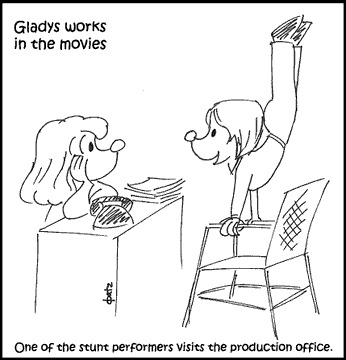
6. Stunts & Special Effects – Well, any of the special departments really. Lots of planning (read “money in prep”) has to happen to make sure the “special” shots happen with all their movie magic on-the-day. The many logistics on set to address issues like safety will also slow down the speed of the production on-the-day.

7. Prototype Equipment – Prototype means there is no backup when it goes wrong or breaks down – you have the only one. You  may need 24-hour fix-it crew to keep the equipment in working order for the set day. If you are fortunate enough to work with a prototype when there is two – one will be being repaired while you’re on set with the other one… Murphy’s rules.

8. Large Vistas – The more you see in a shot, the more it costs. If it’s a country vista in a period piece, there will probably be telephone poles or the like to digitally remove. If it’s a city vista, you may need to close a number of streets with all the permits and personnel required to do so. If you have crowds of people in the vista – that’s a lot of (paid) extra vouchers.

9. International Co-Productions – Granted that structuring a coproduction may be necessary for the Producer to raise sufficient funds to make the movie, but the costs of travelling cast, crew and/or equipment, immigration & customs, the extra sets of accounting books, the extra legal costs to set up the necessary documentation, etc. bring unique expenses to a production that non-copros do not typically have to deal with.

10. Music Rights – There are rights to use the “sheet music” (kind of “author rights”) – that allows you to perform your own version of the song… but there are also “master recording rights” that you also need to purchase if you want to play a certain recording of that song… and sometimes there are also artist rights that have been held back by certain performing artists that you have to purchase too. If the song you want is in the public domain… someone can still write a particular arrangement of the P/D song and therefore attach new “author rights” to the song you thought was going to be free. Research the origin of any and all music you want to include in your film in any manner.

Happy budgeting!

Cheers,
Deb

Writing Budgets Voluntarily

As a P.M. at some point in your career you will be asked to write a budget on spec, or simply on a voluntary basis. Sometimes this is a great opportunity, whereas other times not. Do you know when to say “yes” and when to say “no”? I wrote an article for the MWP Virtual Film School about just this issue. Surf by and have a look:

http://shop.mwp.com/blogs/screenwriting-articles/870152-to-volunteer-or-not-to-volunteer-as-a-production-manager-by-deborah-s-patz

Cheers,

Deb